Sherwin-Williams Cashmere vs. Duration vs. Emerald Explained
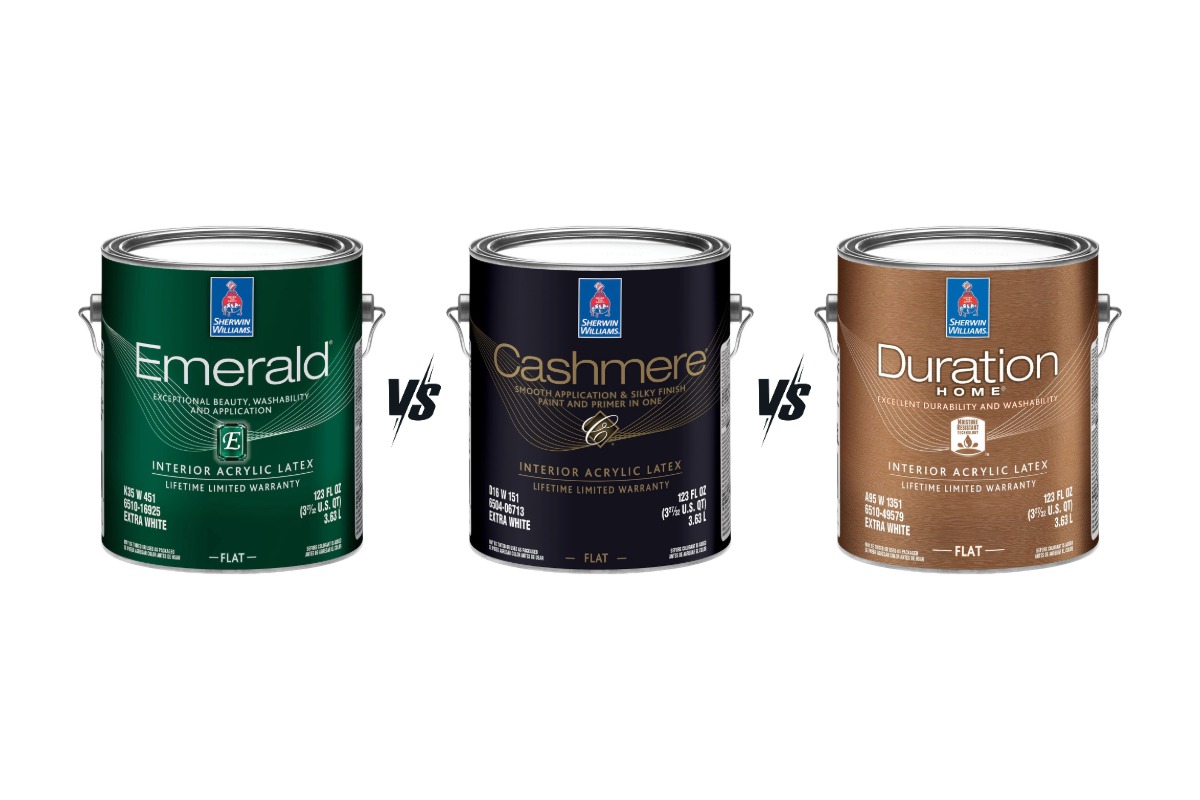
If a painter has ever handed you a proposal listing Sherwin-Williams Cashmere vs Duration vs Emerald — three paint options, three price points — you already know how quickly that conversation can blur. The names sound premium across the board, the price gaps are real, and nobody wants to make a $500 decision they don’t fully understand.
Here’s the honest truth: these are not interchangeable products with cosmetic differences. Each one is engineered differently, performs differently, and is the right answer in different situations. Choosing the wrong one doesn’t just affect your budget — it affects how your walls look in three years.
This guide breaks down all three Sherwin-Williams paint lines in plain language — what each one actually does, where each one belongs in your home, and how a professional uses them to match the right product to the right surface. By the time you’re done reading, you’ll know exactly what you’re being offered and why.
What These Three Paints Actually Are
Cashmere, Duration, and Emerald are Sherwin-Williams’ three premium interior paint lines. They are not entry-level products — all three sit above SuperPaint in the lineup and are what professional painters reach for on quality residential work. The differences between them are not about color selection or finish options, which are available across all three. The differences come down to formula, durability, application behavior, and longevity.
Cashmere was built for smoothness. Its formula includes an auto-leveling technology that causes the paint to self-correct as it dries, reducing brush marks and roller texture and producing a finish that looks nearly airbrushed on well-prepared walls. It applies easily, levels beautifully, and is the most forgiving of the three for surfaces that are in good condition.
Duration was built for durability. Its formula prioritizes resistance — to scrubbing, moisture, mold, and mildew. It is the product Sherwin-Williams developed specifically for high-traffic areas and rooms that take consistent abuse. It’s harder than Cashmere and holds up to repeated cleaning without breaking down.
Emerald was built to do both. It combines the durability of Duration with finish quality that rivals Cashmere, adds the strongest hide and coverage of the three, and carries Sherwin-Williams’ lowest VOC rating across the lineup. It is the top of the line — and the product professional painters reach for when a client wants the best available result and the longest service life.
How the Three Products Differ in Practice
The spec sheet differences are real, but what matters most is how these products behave over time in an actual home. Understanding the Sherwin-Williams Cashmere vs Duration vs Emerald distinction comes down to three practical factors: finish quality, durability, and how each product performs on real-world surfaces.
Cashmere’s auto-leveling finish is genuinely beautiful on smooth, properly prepared walls. It produces a velvety, almost soft-looking surface that photographs well and reads as high-end in any room. The trade-off is durability. Cashmere is not the product for a room that gets heavy use. In low-traffic areas — a formal dining room, a master bedroom, a home office — it performs exactly as advertised and can last years without issue. In a hallway, a mudroom, or a kitchen, it will show wear faster than the other two options. Lighter colors in Cashmere can also yellow slightly over time, which matters in rooms with significant sun exposure.
Duration closes the durability gap. Its formula creates a harder film on the wall surface, which is what allows it to be scrubbed repeatedly without breaking down. If you have kids, pets, or a household that puts walls through daily contact, Duration’s resistance to cleaning is a practical advantage. It does not have Cashmere’s auto-leveling quality, which means it requires a more skilled hand to apply without showing brush marks or roller lines — but in the hands of an experienced painter working on properly prepared walls, the finish is excellent.
Emerald sits at the top for a reason. Its coverage is stronger than either Cashmere or Duration, meaning it hides surface imperfections and color changes more effectively in fewer coats. Its durability matches or exceeds Duration. Its finish quality rivals Cashmere. And its low-VOC formula matters in an occupied home — particularly for households with children, pets, or anyone with sensitivities to paint fumes. The practical result of choosing Emerald is a paint job that looks better longer and requires less maintenance over its service life.
Which Paint Belongs in Which Room
The most useful way to think about this Sherwin-Williams interior paint comparison is not which product is best overall — it’s which product is right for each specific room in your home.
Cashmere: Low-Traffic Spaces
Cashmere is the right call for spaces where the primary goal is a beautiful finish. Formal living rooms, dining rooms, master bedrooms, and guest rooms are natural fits. These are spaces that don’t take daily abuse, where you want the paint to look its best and the room’s atmosphere to feel refined. If your walls are in good condition and the room won’t be subjected to heavy cleaning, Cashmere delivers a finish that’s hard to match at its price point.
Duration: High-Traffic and Moisture-Prone Rooms
Duration belongs in rooms that get used hard. Kitchens, bathrooms, laundry rooms, mudrooms, and hallways all benefit from Duration’s resistance to moisture and scrubbing. If you have school-age children whose hands meet the walls regularly, or pets that rub against surfaces, Duration is the practical choice. It holds up to the kind of cleaning that would degrade a Cashmere finish within a year or two.
Emerald: When You Want No Compromise
Emerald earns its place in rooms where you want no compromise — or where surface conditions make coverage critical. Entryways, home offices used daily, living rooms in active households, and any space where you’re making a significant color change are good candidates. In Fort Worth homes with older drywall, textured walls from mid-century builds, or surfaces that have been repaired and patched, Emerald’s superior hide means fewer coats and a more consistent result. For households with pets or young children where low-VOC matters, Emerald is also the straightforward recommendation regardless of the room.
What Surface Condition Has to Do With It
Paint selection doesn’t happen in isolation from the surface it’s going on. This is the part of the Sherwin-Williams Cashmere vs Duration vs Emerald conversation that most online guides skip — and it’s the part that matters most in practice.
In Fort Worth, the housing stock ranges from early-1900s Craftsman bungalows in Fairmount and Ryan Place with original plaster walls and decades of paint layers, to mid-century ranch homes in Wedgwood with standard drywall, to newer construction on the west side with smooth Level 5 finishes. Each of those surfaces behaves differently under paint, and the product you choose needs to account for that.
On a heavily textured or older surface with visible imperfections, Cashmere’s auto-leveling quality won’t compensate for what’s underneath. Emerald’s stronger hide will produce a more consistent result. On a smooth, freshly prepared wall in excellent condition, Cashmere can perform beautifully in the right room. On a surface that’s been patched and primed across multiple areas — common in older homes — the coverage consistency of Emerald eliminates the risk of those repairs reading through the finished coat.
A professional painter evaluates surface condition before recommending a product. The paint is only as good as what it’s going on — and the preparation underneath it.
Why the Price Difference Is Worth Understanding
The gap between Cashmere and Emerald at retail is real. Cashmere runs roughly $70–$75 per gallon. Duration is similar. Emerald sits at approximately $75–$80 per gallon. On a full interior project, that per-gallon difference translates to a meaningful number.
What that price difference buys you is longevity and coverage. Emerald’s stronger coverage means fewer gallons used to achieve a consistent result on imperfect surfaces — which can offset some of the per-gallon premium. Its durability means fewer touch-ups and a longer interval before the next full paint cycle. For a room that costs $1,500 to paint professionally, the difference between a product that holds up for five years versus eight years is not a small consideration.
The right question is not which product is cheapest. It’s which product gives you the best result on your specific walls over the longest period of time. A professional who understands paint chemistry — not just how to apply it — can answer that question for your home specifically.
What This Means When You’re Looking at a Proposal
When a painter presents you with a three-tier proposal using Cashmere, Duration, and Emerald, they’re not padding the estimate with options. They’re giving you real choices with real consequences. Each tier represents a different product, a different performance level, and a different service life — and the right answer depends on your rooms, your household, and your surface conditions.
The best painters in Fort Worth, TX will walk you through each tier at the estimate — explaining not just the price difference but what you’re actually getting for it. If a painter can’t explain why they’re recommending a specific product for a specific room, that’s worth paying attention to.
Understanding what’s in that proposal before you sign it is what protects your investment in your home. You now know what Cashmere, Duration, and Emerald each do, where they belong, and what drives the difference in cost.
If you’re ready to see all three tiers applied to your specific project — with a clear explanation of what each option includes and why — we’d be glad to walk you through it. Request a free estimate and we’ll bring that conversation directly to your home.
